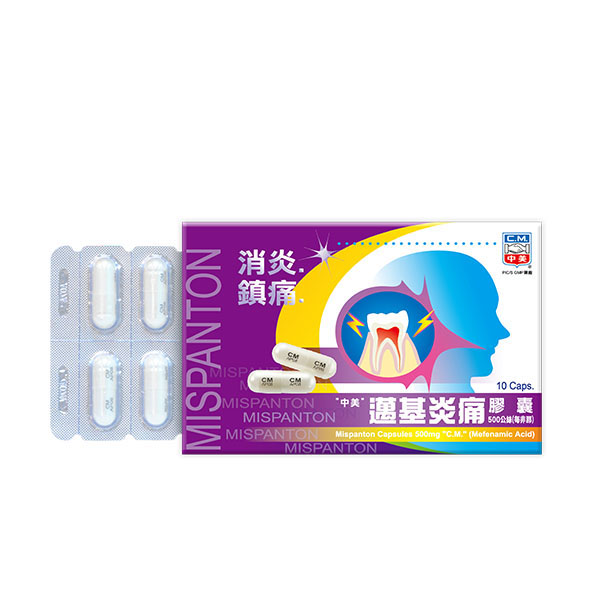

I. Contraindications
- Patients with a history of allergy to this drug should not use it.
- This drug should not be used within 14 days after coronary artery bypass grafting (CABG).
II. Warnings and Precautions
-
- Cardiovascular embolic events: Based on multiple clinical trials of selective COX-2 inhibitors and non-selective NSAIDs, it has been found that taking these drugs for up to three years increases the risk of serious cardiovascular embolic events, including myocardial infarction and stroke, which may be fatal. However, based on current research data, it cannot be confirmed whether various NSAIDs have a similar risk of cardiovascular embolic events. Furthermore, regardless of whether the patient has cardiovascular disease or related risk factors, the relative risk of serious cardiovascular embolic events is similarly increased.
However, individuals with cardiovascular disease or related risk factors already have a higher risk of heart attack or stroke, thus the absolute risk of serious cardiovascular embolic events is even higher after using this type of medication. Other observational studies have found that serious cardiovascular embolic events may occur within the first few weeks of using this type of medication, and the risk increases with increasing dosage. To reduce the potential risk of adverse cardiovascular events from this type of medication, it is recommended to use the shortest possible treatment duration and the lowest effective dose. During medication use, healthcare professionals and patients should be vigilant for adverse cardiovascular events, even if no cardiovascular-related adverse symptoms have been previously observed. Patients need to be informed of the symptoms of serious adverse cardiovascular events and how to manage them. After Coronary Artery Bypass Gynecology (CABG): Two large clinical trials showed that the use of COX-2 selective inhibitors within 10–14 days after CABG increased the incidence of myocardial infarction and stroke. Therefore, this medication is contraindicated within 14 days after CABG. Patients with recent myocardial infarction: Observational studies have shown that the use of NSAIDs after a myocardial infarction increases the incidence of re-infarction, cardiovascular-related death, and overall mortality during the first week of treatment. Studies have also shown that the first-year mortality rate for those using NSAIDs after a myocardial infarction is 20 per 100 people per year, compared to 12 per 100 people per year for those not using NSAIDs. Although the mortality rate decreases year by year after the first year for those using NSAIDs, the mortality rate remains relatively high over the following four years. Therefore, this medication should be avoided in patients who have recently experienced a myocardial infarction unless the benefits of the medication are assessed to outweigh the risk of recurrent cardiovascular events. If this medication is used in patients who have recently experienced a myocardial infarction, they should be closely monitored for signs of myocardial ischemia. Heart Failure and Edema: Randomized controlled trials showed that patients treated with selective COX-2 inhibitors and non-selective NSAIDs were twice as likely to be hospitalized for heart failure compared to the placebo group. Observational studies also found that patients with heart failure using these medications had increased rates of myocardial infarction, hospitalization due to heart failure, and death. Some patients using NSAIDs were observed to experience fluid retention and edema. Therefore, this medication may diminish the cardiovascular effects of some drugs, such as diuretics, ACE inhibitors, or angiotensin receptor blockers (ARBs). Therefore, this medication should be avoided in patients with severe heart failure unless the benefits are assessed to outweigh the risk of worsening heart failure. If this medication is used in patients with severe heart failure, close monitoring for signs of worsening heart failure is necessary. “The use of nonsteroidal anti-inflammatory drugs (NSAIDs) by pregnant women over 30 weeks of gestation may lead to premature closure of the fetal ductus arteriosus and high pulmonary artery pressure, and should be avoided. The use of NSAIDs by pregnant women at 20 weeks of gestation or older may lead to fetal renal dysfunction, oligohydramnios, and even neonatal renal impairment. If a medical professional deems it necessary for a patient to use NSAIDs between 20 and 30 weeks of gestation, treatment should be limited to the lowest effective dose and the shortest possible duration. If the treatment duration exceeds 48 weeks…” In the short term, medical professionals should consider using ultrasound to monitor blood flow. This medication may cause peptic ulcers or gastrointestinal bleeding. Therefore, patients with gastrointestinal diseases should exercise special caution when taking this medication. A small number of patients may experience an increase in blood urea nitrogen while taking nonsteroidal anti-inflammatory drugs (including this medication). However, this increase will stop within a certain limit and will return to normal after discontinuation of the medication. Furthermore, the increase in blood urea nitrogen is unrelated to the increase in serum creatinine levels.
III. Precautions for Special Groups
-
-
- Pregnancy:
-
- Although animal studies have not shown that this drug has a teratogenic effect, the safety of this drug for pregnant and lactating women has not been determined. This drug acts on prostaglandin synthase (PROSTAGLANDIN). Prostaglandin synthase (BIOSYNTHETASE) inhibits the synthesis and secretion of prostaglandins. Other nonsteroidal anti-inflammatory drugs (NSAIDs) also have this effect, which is known to be associated with dystocia and delayed delivery in pregnant animals taking these drugs. Inhibition of prostaglandin synthesis may affect pregnancy and/or embryonic/fetal development. Some epidemiological studies show that use of prostaglandin synthase inhibitors in early pregnancy increases the risk of miscarriage and heart malformations. Animal studies have confirmed that use of prostaglandin synthase inhibitors leads to an increased rate of pre- and post-implantation embryo loss and embryonic/fetal lethality; in addition, animal studies have reported an increased incidence of embryonic malformations (including arteriovenous malformations) in animals given prostaglandin synthase inhibitors during organogenesis. Lactation: Although animal studies have not shown that this drug has a teratogenic effect, the safety of this drug for pregnant and lactating women has not been determined. This drug acts on prostaglandin synthase (PROSTAGLANDIN). BIOSYNTHETASE inhibits the synthesis and secretion of prostaglandins. Other nonsteroidal anti-inflammatory drugs (NSAIDs) also have this effect, which is known to be associated with dystocia and delayed parturition in pregnant animals taking these drugs. **Children:** The circumstances under which children can take this drug and the appropriate dosage are still undetermined. **IV. Interactions:** **At therapeutic doses, there is no clinical evidence of any interactions with other commonly used medications. However, special caution should be exercised when other NSAIDs are used in patients taking anticoagulants and thiazide diuretics.** **V. Important Clinical Side Effects/** Adverse Reactions Common side effects, besides gastrointestinal issues, include edema in a few patients, especially ankle edema. Routine ophthalmoscopy and slit-lamp examination usually do not reveal any changes in the eyes. Some people may experience a decrease in hemoglobin or blood volume unrelated to gastrointestinal bleeding. Changes in liver function have also been reported in some patients. Most nonsteroidal anti-inflammatory drugs (NSAIDs), including this drug, can increase serum transaminase levels (SGPT) in some patients. Cardiovascular Embolistic Events: NSAIDs increase the risk of serious cardiovascular embolic events, including myocardial infarction and stroke, which can be fatal. This risk may occur early in the use of these drugs, and the longer the use, the greater the risk. After Coronary Artery Bypass Graft (CABG) surgery (14) This medication is contraindicated within 3 days.
-
-
VI. Overdose
In case of overdose, supportive and symptomatic treatment can be given to the patient.