

As the population ages, family structures change, and chronic disease management and multiple caregiving responsibilities increase, domestic demand for self-care and preventive health is on the rise. To mark “World Self-Care Day” on July 24, Chung Mei Pharmaceutical Group — now in its 90th year — has launched a new brand film and corporate identity, “SyntroMed,” signaling its transition from a traditional pharmaceutical manufacturer toward a platform-based enterprise integrating medications, health supplements, pharmacist channels, community philanthropy, and health services.
Chung Mei Pharmaceutical noted that the self-care market is no longer limited to taking medication after falling ill, but now extends across seven dimensions: health literacy, mental health, physical health, healthy eating, reducing risk factors, maintaining good hygiene, and correct use of products and services.
As public health awareness grows, maintaining regular routines, balanced diets, moderate exercise, stress management, correct medication use, and regular health check-ups are gradually becoming key parts of everyday health management.
Lin Yi-lin (林宜琳), Brand Director of Chung Mei Pharmaceutical, said that as Taiwan approaches becoming a super-aged society, growing attention is being paid to caregivers’ financial pressures and family health management needs. Many people take on long-term supporting roles at home and at work — including new mothers, the “sandwich generation,” family caregivers of people with dementia, and frontline medical staff — yet often neglect their own physical and mental wellbeing.
The 90th anniversary brand film launched by Chung Mei Pharmaceutical features a new mother, a sandwich-generation father, a family caregiver for a relative with dementia, and an emergency room nurse as its central figures, portraying the everyday realities of different groups who continue to give of themselves at home and at work.
Rather than centering on a specific illness or medication, the film approaches the subject through caregivers’ lived experiences, aiming to draw greater social attention to these “invisible givers” and strengthen the brand’s connection to everyday health management.
The company also noted that for those caring for family members long-term or working under high pressure, self-care includes building a sustainable life rhythm — such as setting aside regular rest time, sharing caregiving duties with family members, accepting outside support, and allowing oneself to express fatigue, rather than treating “bearing everything alone” as a given.
Lin said health should not only be taken seriously after illness occurs; knowing how to prevent problems, recognize risks, aIs 30 Already Considered Old?
Beginning in 2025, Taiwan’s Ministry of Health and Welfare lowered the eligibility age for free adult preventive health examinations from 40 to 30. Does this suggest that health risks are emerging at increasingly younger ages? In particular, the prevalence of the “three highs”—high blood pressure, high blood glucose, and high blood lipids—has become an increasingly important concern.
According to the latest edition of the National Nutrition and Health Survey published by the Ministry of Health and Welfare, among adults aged 30–39, the prevalence rates of the three major metabolic risk factors are 9.7% for hypertension, 2.5% for high blood glucose, and as high as 18.7% for dyslipidemia.
Dyslipidemia, which has the highest prevalence among these conditions, refers to abnormally elevated levels of total cholesterol or triglycerides in the blood. It is commonly associated with lifestyle factors such as obesity, prolonged sitting, and increasingly refined or highly processed diets, with obesity being one of the most important contributing factors.
The First Health Concern: Cholesterol
According to Taiwan’s Health Promotion Administration, 51.3% of adults aged 18 and older meet the criteria for being overweight or obese. In other words, approximately one in every two adults is overweight or obese.
The World Health Organization also recognizes obesity as a chronic disease.
When excessive body fat accumulates, particularly in the abdominal area, abnormalities in lipid metabolism are more likely to occur. These may include elevated triglycerides, reduced levels of high-density lipoprotein cholesterol (HDL, or “good cholesterol”), and changes in the characteristics of low-density lipoprotein cholesterol (LDL, or “bad cholesterol”) particles.
These changes may further increase the risk of atherosclerosis.
In other words, obesity and dyslipidemia can be viewed as two health warning signals appearing at the same time. Weight gain is not merely a matter of physical appearance; it may also be accompanied by an imbalance in blood lipids, placing additional long-term stress on the blood vessels and increasing cardiovascular risk.
The Second Health Concern: The Liver
The liver is often referred to as a “silent organ” because there are few pain-sensing nerves within the liver itself. As a result, liver damage may progress without causing noticeable symptoms.
According to data from Taiwan’s Ministry of Health and Welfare, the prevalence of fatty liver disease in Taiwan is approximately 33.3%.
Fatty liver disease is more than simply having “a little extra fat in the liver.” It can affect the liver’s normal metabolic functions and is closely associated with cholesterol and lipid metabolism.
A Family Medicine Physician’s Reminder: Health Does Not Deteriorate Overnight—It Develops Over Time
Family medicine physician Dr. Hung Wei-Chieh notes that annual health examinations for first-year university students frequently identify abnormal health indicators, and overweight young adults are by no means uncommon.
For this reason, when the Ministry of Health and Welfare announced that the eligibility age for free adult preventive health examinations would be lowered to 30, the change strongly resonated with him.
“Regardless of age, people should pay attention to their health, because health does not deteriorate overnight. It is the result of gradual accumulation over time.”
Dr. Hung compares the body to the plumbing system in a home.
A water pipe may be perfectly clean at first. However, if the water flowing through it contains impurities, deposits may gradually build up over time. Without proper attention to water quality, the pipe may eventually become increasingly clogged.
The human body is similar. When obesity, elevated cholesterol, and chronic inflammation repeatedly occur, health-related problems may gradually accumulate within the blood vessels and eventually affect different parts of the body.
Two Manifestations of Metabolic Imbalance: Abnormal Blood Lipids and Fatty Liver Disease
Weight management is one of the topics Dr. Hung most frequently discusses with patients in his clinical practice.
Some patients jokingly say that being a doctor must be easy because whether the problem is fatty liver disease or high cholesterol, the advice always seems to be the same: lose weight.
But what can weight loss actually change?
“Large-scale studies have shown that when an overweight individual loses approximately 5% of their body weight, a number of health conditions may improve. Some studies involving patients with steatohepatitis have even found that when weight loss reaches more than 10%, a substantial proportion of patients may experience resolution of steatohepatitis.”
Dr. Hung explains that because the liver is such a “quiet” organ, people may easily underestimate the seriousness of the problem and assume that being only slightly overweight is harmless.
However, once liver disease develops or progresses, the impact on overall health may worsen rapidly.
Why Do Abnormal Blood Lipids and Liver Problems Often Occur Together?
The liver is one of the body’s key organs for regulating cholesterol and lipoprotein metabolism. Most of the cholesterol in the human body is produced internally rather than obtained directly from food.
When obesity, insulin resistance, and fatty liver disease occur together, lipid metabolism within the liver may also become abnormal.
This may not only contribute to elevated triglyceride levels but may also increase levels of small dense low-density lipoprotein particles, or small dense LDL, which are considered more strongly associated with atherosclerotic risk.
Therefore, fatty liver disease and dyslipidemia may represent different manifestations of the same underlying metabolic dysfunction.
Addressing Two Health Problems Through One Key Change—and Eating Less of Certain Foods
A sedentary lifestyle, frequent dining out, and regular alcohol consumption have become common features of modern life. These habits are also important contributors to obesity and chronic disease.
Dr. Hung therefore recommends appropriate weight management as an effective strategy for helping improve cholesterol levels, fatty liver disease, and a variety of related health concerns.
He also emphasizes that although many weight-loss approaches are currently available, the most important factor remains what and how we eat every day.
In particular, reducing the intake of highly processed foods is essential.
A simple rule of thumb is:
“If you can no longer recognize the original form of the ingredients, eat less of it.”
Examples include cookies, candy, potato chips, and similar highly processed foods.
For Sedentary and Frequent Dining-Out Lifestyles: Address Weight Management and Liver Health Together
Support for Cholesterol Management and Weight Reduction: 優美孅
Supportive Medication for Liver Health: 顧爾肝
【優美孅 Oil-Cut Capsules】
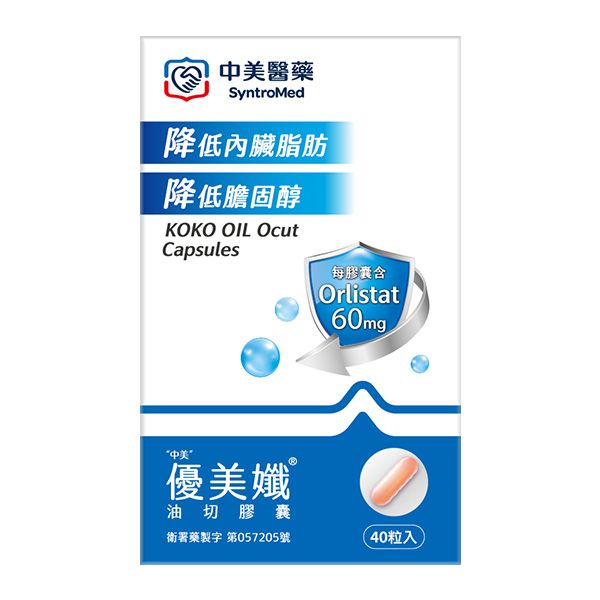
A product from SyntroMed under the 優美孅 brand.
This medication is indicated as an adjunct for weight reduction in overweight adults aged 18 years and older with a body mass index (BMI) of ≥25 kg/m² and should be used in conjunction with a calorie-restricted, low-fat diet.
Drug License No.: 衛署藥製字第057205號
Indication:
Adjunctive weight reduction for overweight adults aged 18 years and older with a BMI of ≥25 kg/m², in conjunction with a calorie-restricted, low-fat diet.
A medication to be used under the guidance of a physician, pharmacist, or qualified pharmaceutical professional.
Recognized by Taiwan’s Ministry of Health and Welfare, the U.S. Food and Drug Administration (FDA), and the European Medicines Agency (EMA).
Clinical data have demonstrated benefits across multiple health-related measures:
- Weight reduction: A reduction of 3.5 kg after four months of use and 5.2 kg after six months.
- Reduction in body fat: When taken with meals, the medication can inhibit the absorption of approximately 25% of dietary fat, with visceral fat reduced by 10% after six months.
- Cholesterol reduction: After six months of use, LDL cholesterol was reduced by 3.5% and total cholesterol by 2.4%.
【顧爾肝 Capsules】
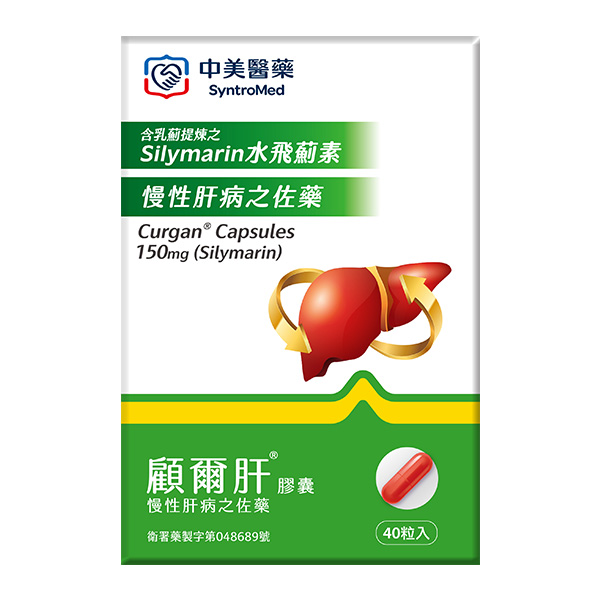
顧爾肝 Capsules, 40 tablets
Drug License No.: 衛署藥製字第048689號
Indication:
Adjunctive therapy for chronic liver disease.
A medication to be used under the guidance of a physician, pharmacist, or qualified pharmaceutical professional.
顧爾肝 helps stabilize liver cell membranes and supports the recovery of damaged liver cells. It may help liver cells impaired by harmful substances associated with food, viruses, medications, and other causes restore normal physiological function.
Each 顧爾肝 capsule contains 150 mg of silymarin, making it one of the pharmaceutical products on the market with a relatively high silymarin content.
Medication Reminder: What Is the Difference Between Pharmacist-Guided Medication and Prescription Medication?
Did you know that the total number of pharmacies in Taiwan has already exceeded the combined number of stores operated by the four major convenience-store chains?
Although pharmacies are highly accessible and obtaining medication is convenient, certain medicines are classified as products that require guidance from a physician, pharmacist, or qualified pharmaceutical professional.
What exactly does this mean? Can these products simply be purchased and used in the same way as an ordinary over-the-counter headache medicine?
The answer is no.
A Simple Comparison of Two Medication Categories
| Category | Description | Where to Obtain It |
|---|---|---|
| Pharmacist-guided medication | Medicines with stronger pharmacological effects that require professional assessment and guidance | Available only through pharmacies |
| Prescription medication | Medicines that require medical evaluation and a physician’s prescription | Dispensed at a pharmacy with a prescription issued by a physician |
Invisible Metabolic Warning Signs, Visible Actions for Better Health
Obesity, abnormal cholesterol levels, and fatty liver disease may appear to be three separate health concerns. In reality, however, they may represent different manifestations of the same gradually dysregulated metabolic system.
As lifestyles continue to change, abnormal blood lipids are no longer a health issue exclusive to middle-aged or older adults. Younger adults also need to begin managing their health risks early.
Prolonged sitting, insufficient physical activity, inadequate sleep, frequent alcohol consumption, and diets high in sugar, saturated fat, and ultra-processed foods can all place additional strain on the body over time.
Many people frequently experience persistent tiredness despite adequate sleep, unexplained fatigue, or reduced energy and concentration.
Even when routine health examinations do not yet show abnormal values, the body may already be moving toward a state sometimes described as “suboptimal health.”
Such symptoms may represent early warning signs of metabolic imbalance.
It is important to remember that abnormal cholesterol levels and fatty liver disease often cause few or no noticeable symptoms in their early stages.
The absence of discomfort does not necessarily mean that no health problem exists. Likewise, normal liver enzyme levels do not necessarily guarantee that the liver is completely free of abnormalities.
Dr. Hung emphasizes that practical protection of metabolic and cardiovascular health begins with weight management, a balanced diet, regular physical activity, and periodic monitoring of blood lipids and liver health.
Early detection and timely intervention remain among the most practical approaches to maintaining long-term metabolic and cardiovascular health.
If you are concerned about cholesterol or liver-related health issues, consult a physician or pharmacist for professional advice and select medications and care strategies appropriate to your individual health condition.
Please read all warnings, precautions, and instructions in the package insert carefully before use.
For overweight adults aged 18 years and older with a BMI of ≥25 kg/m². Use in conjunction with a calorie-restricted, low-fat diet.
衛署藥製字第048689號、衛署藥製字第057205號G.M.P.G-11570 北市衛藥廣字第115090266號